
 Login / Register


News & Reviews
-thumb_webp.webp)
Mercedes Reveal W17 Ahead of F1’s 2026 Rules
26 Jan 2026
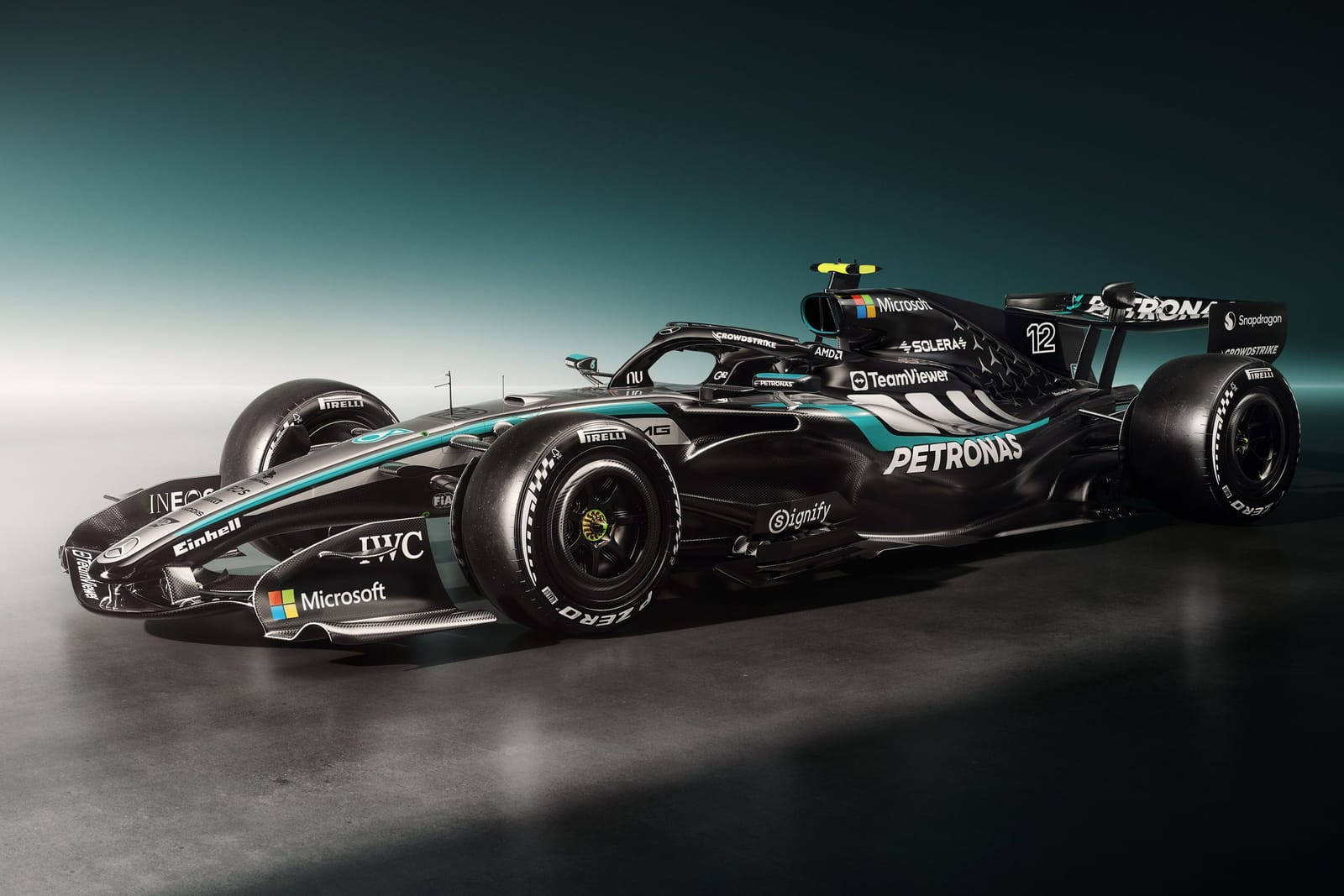
Mercedes-AMG Petronas has formally unveiled its 2026 Formula 1 challenger, the W17, marking a fresh chapter as the sport enters one of its most radical technical resets in modern history. After several seasons of playing catch-up to Red Bull and McLaren under the 2022 aero rules, Mercedes is banking on the 2026 regulations to reset the competitive order.
Team principal Toto Wolff described the changes as transformational, demanding innovation across every performance vector — from chassis to powertrain — as F1 gears up for what many insiders believe will be the most profound set of rules since the hybrid era began.
W17 at a Glance: What’s New
The W17 represents a clean-sheet reinterpretation driven by the 2026 technical framework. Unlike the evolutionary updates seen in recent years, this car embodies fundamental changes in:
- Chassis proportions
- Aerodynamic philosophy
- Hybrid power unit integration
- Sustainable fuel and energy deployment strategy
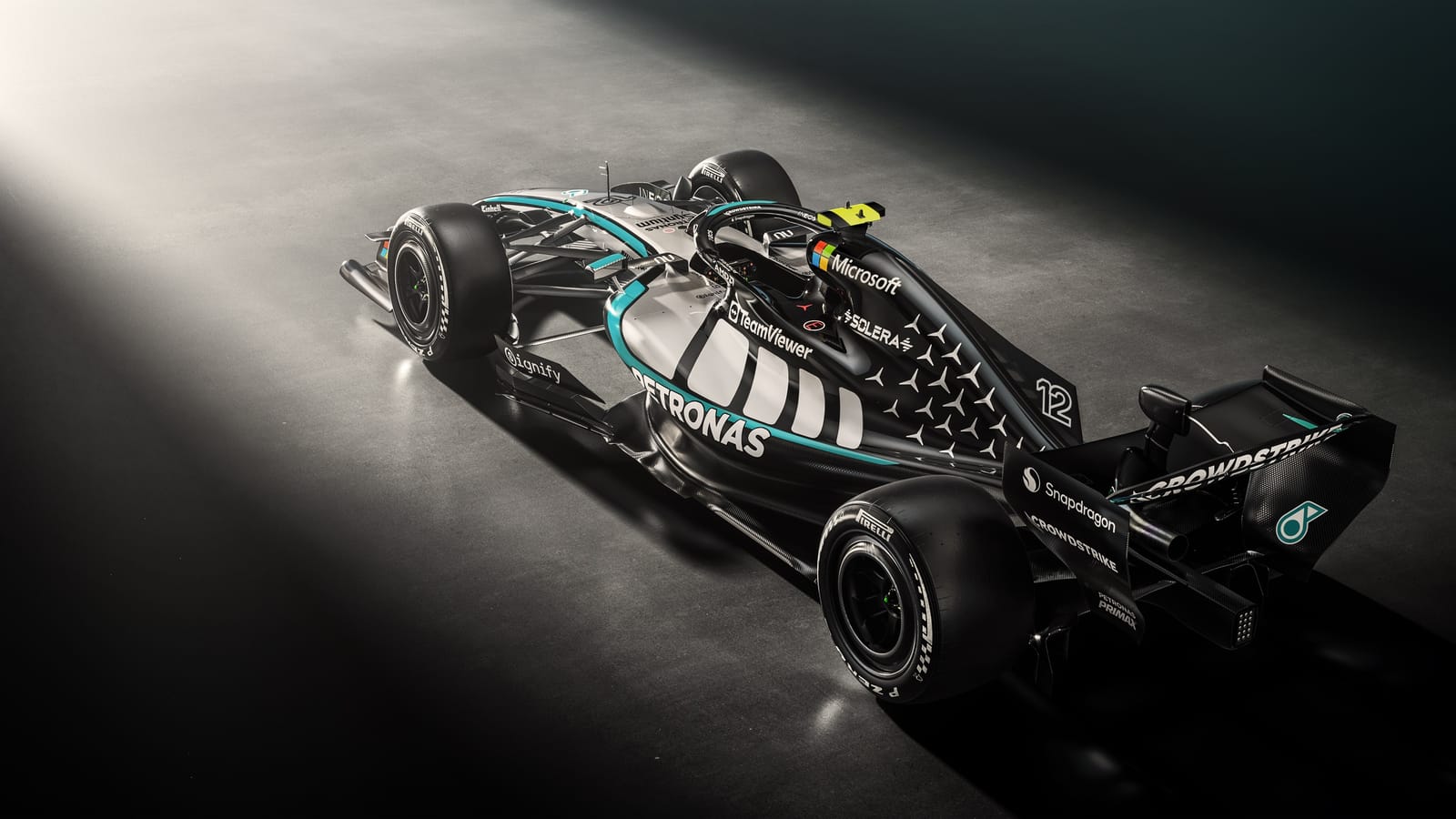
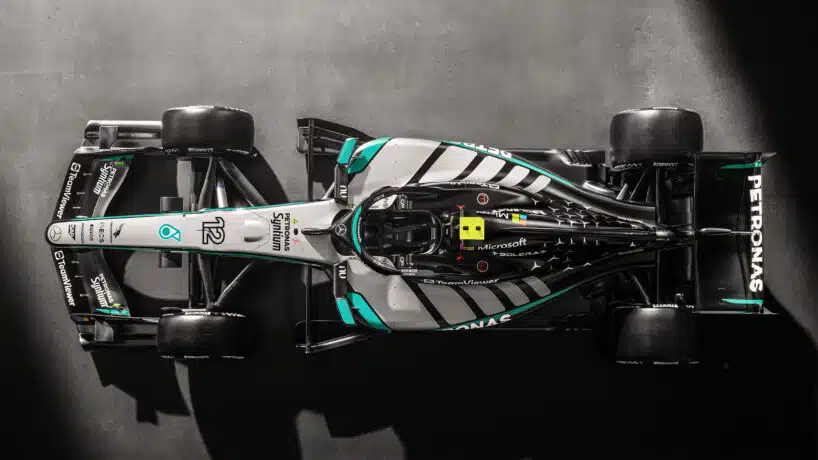
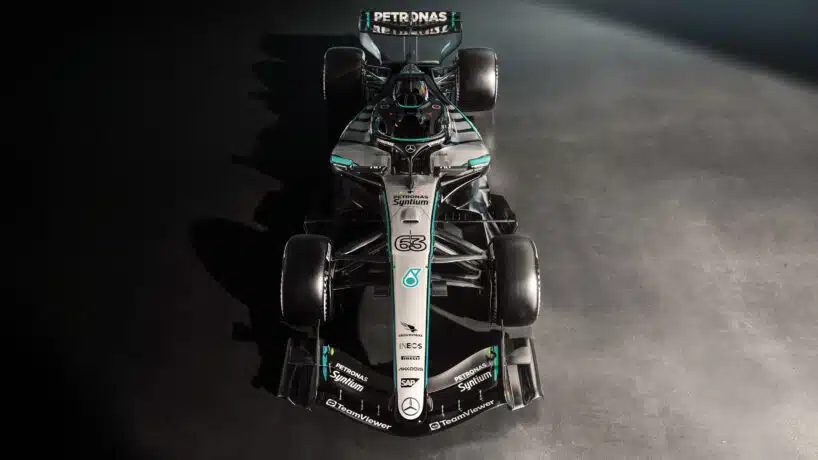
Early shakedown photos and images show Mercedes pairing a refined silver-black livery with new sponsor placements (including Microsoft) — but it’s what’s underneath that really matters.
2026 Rules: The Big Technical Shifts
To understand the W17’s development context, you need to grasp the rulebook overhaul that defines 2026.
Power Unit Revolution
The biggest shift comes on the engine side:
- MGU-H eliminated, significantly simplifying hybrid architecture.
- MGU-K power nearly triples, increasing from ~120 kW to 350 kW, making electrical deployment central to performance.
- Internal Combustion output drops, but overall power remains high with a roughly 50:50 split between electric and ICE contributions.
- 100 % sustainable, carbon-neutral fuels become mandatory.
- New ‘Manual Override Mode’ boosts overtaking opportunities by allowing tactical electrical power deployment when within a second of a rival.
The net effect is a hybrid system that demands smarter energy harvesting, strategic deployment, and greater synergy between powertrain and chassis design.
Chassis & Aerodynamics Reset
The 2026 regulations reshape the car’s physical dimensions and how it makes downforce:
✔ Smaller footprint — shorter wheelbase (~3400 mm) and narrower width (~1900 mm).
✔ Weight reduction — a leaner structure targeting a lighter baseline.
✔ Downforce trimmed by ~30 % and drag by ~55 % compared to the outgoing formula, prioritising agility over peak aerodynamic load.
✔ Active aerodynamics debut — fully adjustable wing elements replace the former DRS system, allowing crews to tune for straight-line efficiency and cornering grip dynamically during a lap.
These rules reverse the long trend toward ever-larger, high downforce ground-effect cars, forcing engineers to innovate rather than exploit aero “tunnels” to produce grip. The result should be cars that can follow each other more closely, with fewer dirty-air penalties and better racing.
Mercedes’ Technical Approach
Active Aero & Efficiency First
The W17 integrates the new active aero system as a core performance lever rather than a bolt-on feature. Under the 2026 regime, the front and rear wings adjust in real time — toggling between high-downforce cornering and low-drag straight-line configurations. Drivers manually engage these modes to shape the car’s aerodynamic profile lap by lap.
This system goes beyond the classic DRS: instead of just being an overtaking aid, it allows intelligent aero management that tracks energy usage throughout a lap.
Harmonic Aero / Powertrain Integration
With the electrical power boost and hybrid strategy taking centre stage, Mercedes’ aero and powertrain divisions have worked from day one with tight integration. Elements such as cooling packaging, battery placement, and aerodynamic balance must work in concert to harness the hybrid system’s potential — a departure from prior engine-first or aero-first development siloes.
Team Dynamics & Personnel
A significant personnel change within Mercedes-AMG Petronas is the announced departure of lead designer John Owen, long instrumental in the team’s championship success. Owen’s departure midway through 2026 marks a transitional moment, with engineering director Giacomo Tortora taking over the car design helm.
This shift could influence both development pace and philosophical consistency — particularly as the team tries to maximise the W17’s potential across a demanding season.
Competitive Implications
While Mercedes gear up to challenge again, the landscape is more open:
- Ferrari has already unveiled its 2026 SF-26 with a complete rethink of aero and hybrid integration, highlighting the breadth of approaches teams are exploring under the new rules.
- Other teams like Red Bull, Aston Martin (with Honda engines), and newcomers like Audi are also redefining their design priorities, elevating the competitive spectrum heading into 2026.
Outlook: Pre-Season and Beyond
With pre-season testing kicking off soon (starting in Barcelona and later Bahrain ahead of the season opener in Australia on March 8), Mercedes will soon begin translating theoretical potential into real world performance benchmarks.
Early indications suggest that the W17’s balance and energy deployment strategy will be under the microscope as teams grapple with extracting performance from the novel hybrid and aero systems. It’s likely that initial races will be as much about understanding software and energy strategies as outright speed — a new challenge for drivers and engineers alike.
Recent Articles
Most Viewed
-thumb_webp.webp)
-thumb_webp.webp)
Advice


Related Articles
-thumb_webp.webp)

-thumb_webp.webp)
-thumb_webp.webp)
-thumb_webp.webp)
-thumb_webp.webp)