
 Login / Register


News & Reviews
-thumb_webp.webp)
Brakes Explained
16 Dec 2025
Brakes are the single most critical safety system on any road car, yet they’re often misunderstood, delayed, or reduced to guesswork. Many drivers only react when a warning light appears, a noise becomes unbearable, or braking performance has already degraded. By that point, the cost—and the risk—has usually increased.
This guide breaks down how braking systems actually wear, when components should be replaced, how brake quality differs in the real world, and what specific noises are telling you about your car.
How Modern Braking Systems Wear
Most passenger vehicles in Qatar use disc brakes at the front and either disc or drum brakes at the rear. The primary wear components are:
- Brake pads
- Brake discs (rotors)
- Brake fluid
Pads are designed to wear first. Discs wear more slowly but are not permanent components. Brake fluid does not “wear” mechanically, but it degrades chemically and thermally over time.
Brake Pads: More Than Just Thickness
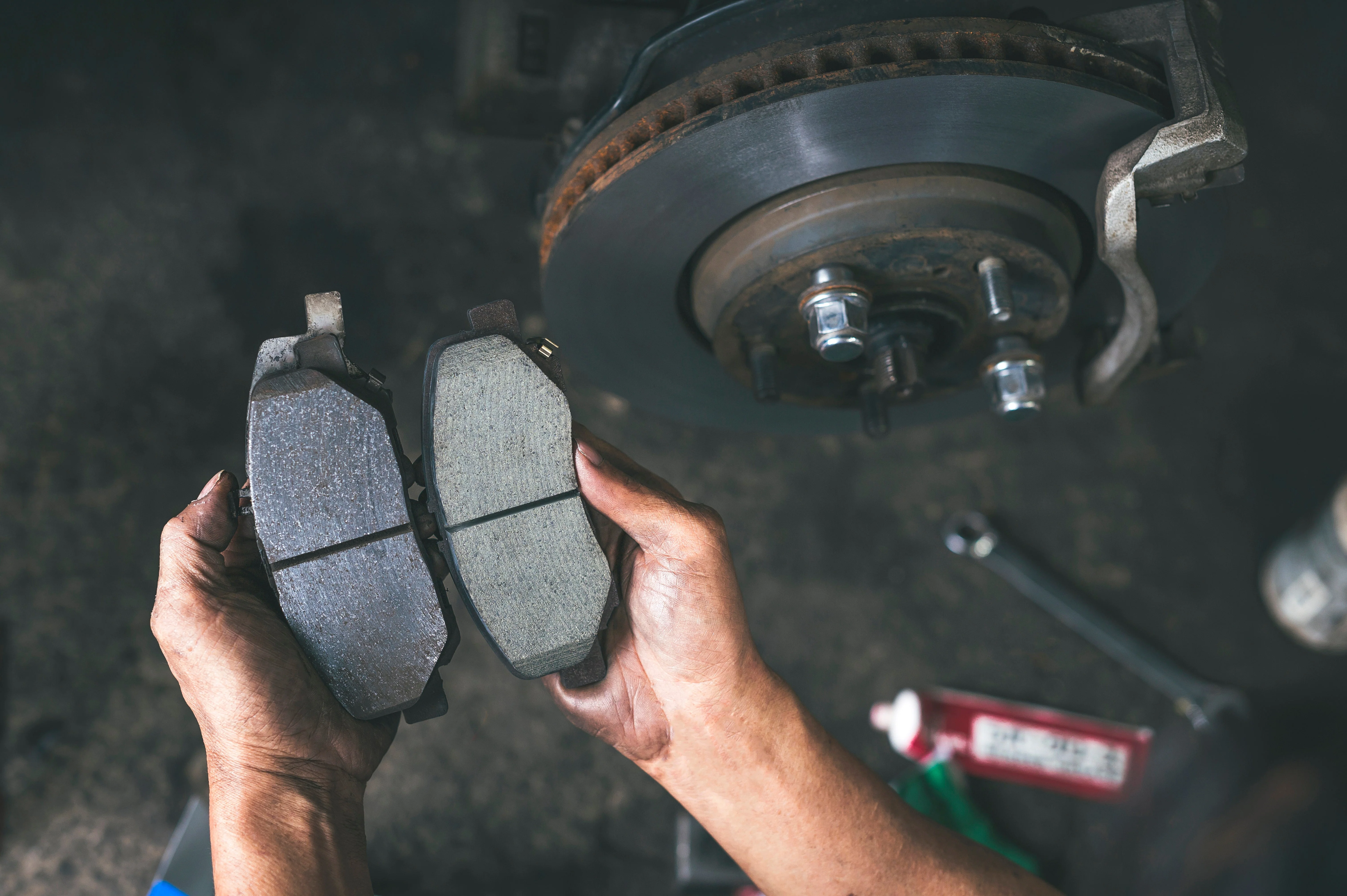
Brake pads are a friction material bonded to a metal backing plate. As you brake, that friction material transfers a thin layer onto the disc surface. Proper braking performance depends on this transfer layer being consistent.
In normal mixed driving, front brake pads typically last 40,000–70,000 km, while rear pads may last longer. However, in Qatar, real-world lifespan is often shorter due to:
- High ambient temperatures
- Heavy traffic and frequent stop-start driving
- Highway speeds followed by hard braking
- Dust and sand contamination
Once pad material drops below 3 mm, braking efficiency begins to fall rapidly. Below 2 mm, replacement is urgent.
Brake Discs (Rotors): Why They Don’t Last Forever
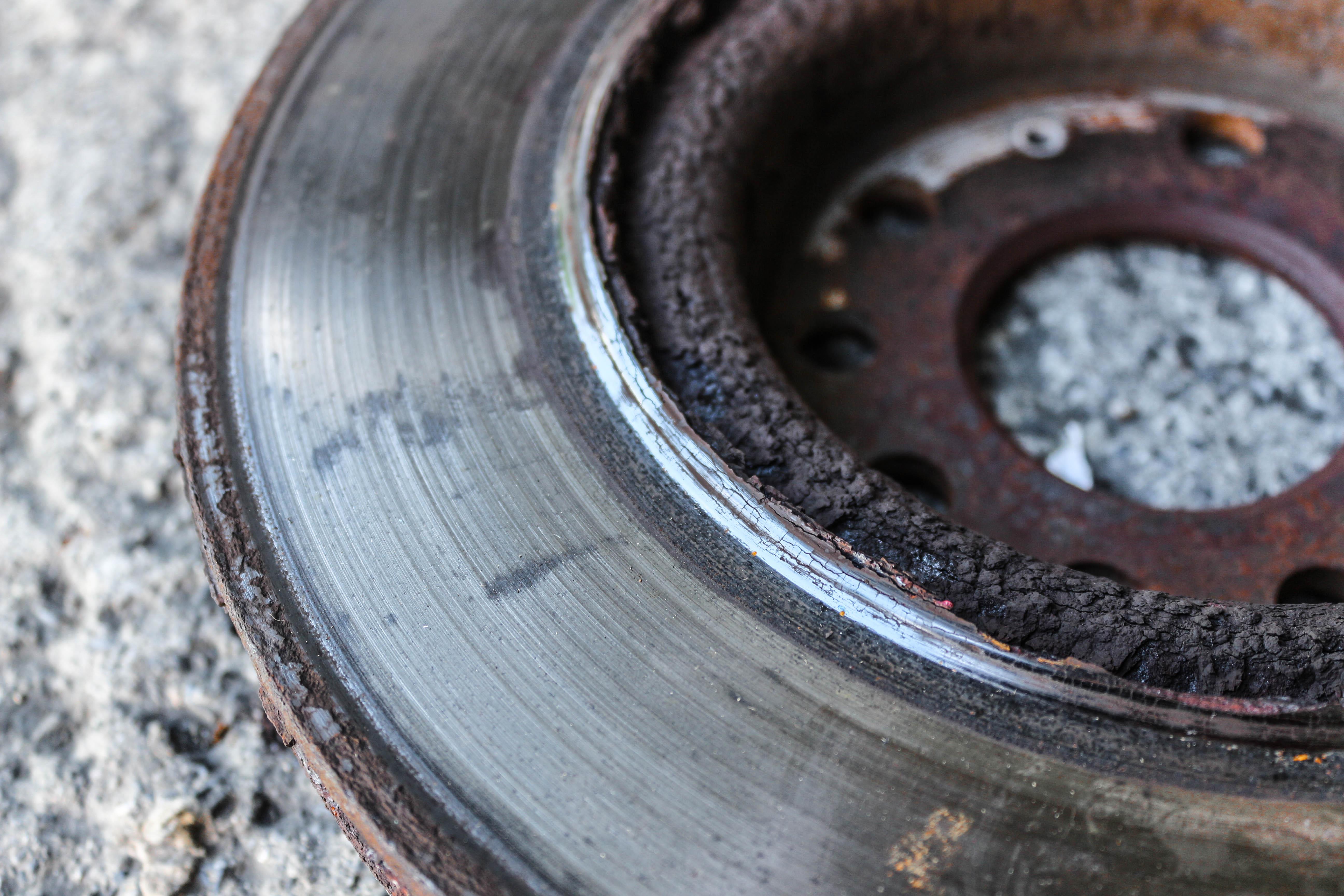
Brake discs endure extreme heat cycles. Each hard stop can raise disc temperatures to 300–500°C, even higher under aggressive driving. Over time, this causes:
- Thickness reduction
- Heat stress and micro-cracking
- Surface glazing or uneven deposits
Discs are manufactured with a minimum thickness specification, stamped on the hub or listed by the manufacturer. Once a disc wears below this limit, it cannot safely dissipate heat.
In practice, most discs are replaced every second pad change, but this is not a rule—it depends on measured thickness and surface condition.
Skipping disc replacement to “save money” often results in:
- Vibration under braking
- Reduced stopping power
- Accelerated wear of new pads
Brake Fluid: The Overlooked Component
Brake fluid is hygroscopic—it absorbs moisture from the air. Over time, this lowers its boiling point.
Fresh DOT 4 fluid boils at around 230–260°C. Contaminated fluid can boil below 180°C, which is dangerous in hot climates.
When brake fluid boils, it creates compressible gas bubbles. The result is a soft or sinking brake pedal, especially after repeated braking.
In Qatar’s heat, brake fluid should be replaced every 2 years, regardless of mileage.
Diagram suggestion: Boiling point comparison between fresh and contaminated brake fluid.
When Should Brakes Actually Be Replaced?
Mileage alone is unreliable. Replacement should be based on inspection and symptoms, not assumptions.
Pads should be replaced when:
- Thickness reaches 2–3 mm
- Wear indicators begin squealing
- Brake pedal response feels delayed
Discs should be replaced when:
- Below minimum thickness
- Pulsation or vibration occurs under braking
- Visible cracking or heavy scoring appears
Fluid should be replaced when:
- Over 24 months old
- Pedal feels spongy after heat
- Fluid appears dark or cloudy
Ignoring early signs usually escalates a pad replacement into a pad-and-disc job—or worse.
Brake Quality: The Real Differences That Matter
Not all brake components are created equal, even when they “fit” the same car.
Brake Pad Compounds
Low-cost pads often use harder compounds to extend life. The trade-off is:
- Less initial bite
- More noise
- Increased disc wear
Higher-quality pads use balanced compounds that:
- Maintain friction at high temperatures
- Produce less dust
- Protect disc surfaces
Ceramic pads, for example, offer quieter operation and cleaner wheels, but may feel less aggressive at cold temperatures. Semi-metallic pads provide stronger bite but generate more noise and dust.
There is no “best” pad—only the correct one for the car’s weight, performance, and use case.
Brake Discs: Material and Manufacturing Matter
Cheaper discs often suffer from:
- Inconsistent casting density
- Poor heat dissipation
- Warping under thermal load
Higher-quality discs are:
- Precision-balanced
- Heat-treated
- Designed for stable friction transfer
On heavier vehicles—SUVs, performance sedans, or cars frequently driven at highway speeds—disc quality directly affects safety and comfort.
Understanding Brake Noises: What Your Car Is Telling You
Brake noise is not random. Each sound usually points to a specific condition.
High-pitched squealing at low speeds
Often caused by pad vibration or worn wear indicators. Common on cheaper pads or when pads are nearing end of life.
Grinding or metallic scraping
Indicates the friction material is gone and metal is contacting the disc. At this stage, disc damage is almost guaranteed.
Thumping or knocking over bumps
Can be loose caliper hardware or improperly installed pads.
Vibration or shudder during braking
Usually caused by uneven disc deposits or disc thickness variation—not “warped” discs, as commonly believed.
Single loud squeal in the morning
Normal surface rust on discs, especially after washing or humidity. Should disappear after a few brake applications.
Why Brakes Should Never Be Delayed
Brakes rarely fail suddenly. They degrade progressively, giving warning signs that are often ignored. The cost difference between early replacement and late replacement can be significant—not just financially, but in stopping distance.
At 100 km/h, even a 10% reduction in braking efficiency can add several car lengths to your stopping distance. On Qatar’s fast highways, that margin matters.
Final Word
Brakes are not an area for guesswork, generic parts, or delayed maintenance. Understanding how they wear, what quality actually means, and how to interpret warning signs allows drivers to make informed decisions—before safety is compromised.
If there’s one takeaway, it’s this: brakes don’t just stop your car; they define how confidently and predictably it responds in every situation.
Recent Articles
Most Viewed
-thumb_webp.webp)
-thumb_webp.webp)
Advice


Related Articles
-thumb_webp.webp)

-thumb_webp.webp)
-thumb_webp.webp)
-thumb_webp.webp)
-thumb_webp.webp)