Login / Register


News & Reviews
-thumb_webp.webp)
Do Shocking Roadside Warnings Actually Make Us Safer?
08 Feb 2026
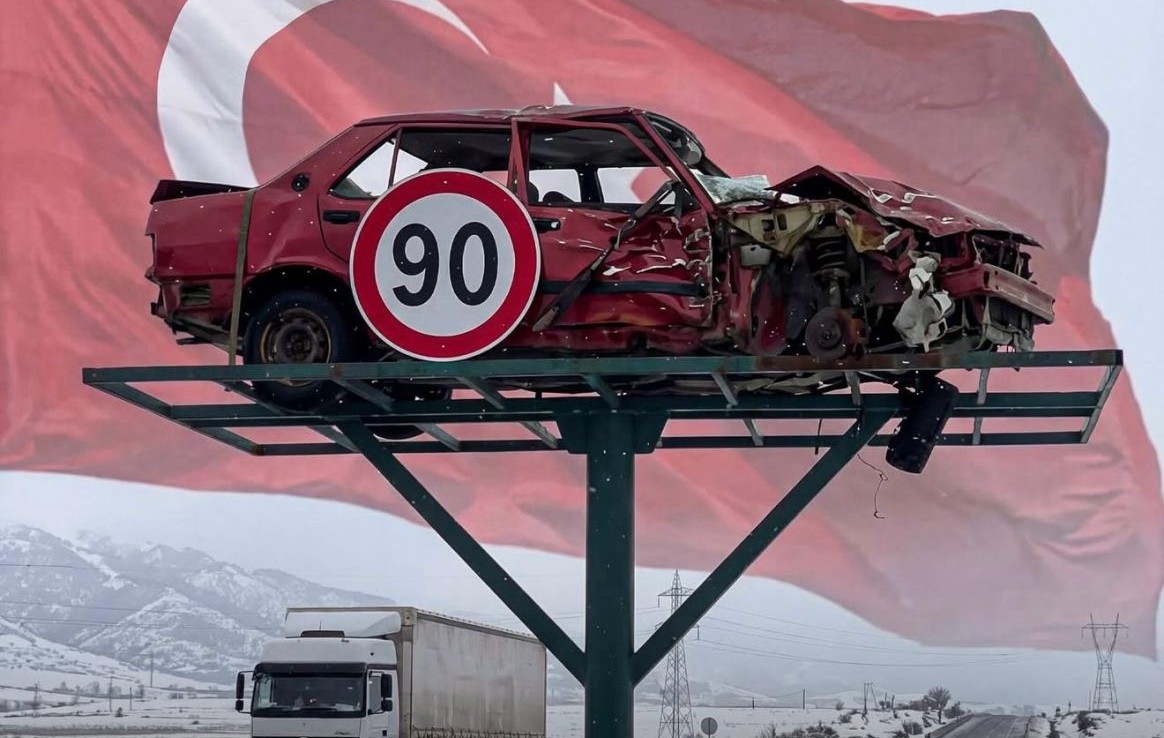
On a Turkish highway, drivers recently passed something far more confronting than a speed camera or warning sign:
a wrecked car deliberately left on the shoulder, twisted metal and all.
It wasn’t an accident waiting for recovery. It was the message.
The logic is simple — if drivers see the consequences of reckless behaviour, they’ll slow down, pay attention, and rethink their habits. But does this kind of shock tactic actually improve road safety, or does it just feel effective?
Research suggests the answer is more complicated than it looks.
When Fear Works — and When It Backfires
There’s no denying that visceral visuals grab attention. A mangled car is harder to ignore than a printed slogan. In the short term, drivers often do react — slowing down, scanning the road more carefully, or briefly reassessing risk.
But multiple studies show that attention is a double-edged sword.
Research into dynamic message signs displaying fatality statistics found that drivers exposed to emotionally charged safety messages were actually more likely to be involved in a crash shortly afterward. The reason wasn’t recklessness — it was distraction. The message pulled mental focus away from the primary task: driving.
In other words, a warning that demands too much cognitive processing can increase risk instead of reducing it.
That’s a sobering contradiction for campaigns built around shock value.
What Does Consistently Reduce Crashes
Where safety interventions succeed, they tend to share three characteristics:
they’re contextual, actionable, and immediate.
Large-scale road safety research shows that systems providing real-time guidance — such as variable speed limits, weather-based alerts, and hazard-specific warnings — lead to measurable reductions in collisions. When drivers are told what to do right now, rather than reminded of abstract danger, behaviour changes more reliably.
The same principle applies inside the car.
Technologies like Electronic Stability Control, automatic emergency braking, and collision warnings have delivered some of the strongest safety gains of the past two decades — cutting certain crash types by double-digit percentages. These systems don’t lecture drivers. They intervene.
Engineering, not emotion, does the heavy lifting.
So Where Does the Wrecked Car Fit In?
A crashed vehicle on the roadside sits in a grey area between symbolism and system design.
Unlike billboards or statistics, it’s contextually real — the same road, same speed environment, same risks. That authenticity gives it power. Drivers aren’t imagining a crash; they’re seeing the aftermath in their own lane.
But without guidance, that power fades quickly.
Does the wreck show why it happened?
Speed? Distraction? Tyres? Fatigue?
Without clarity, the image risks becoming just another roadside anomaly — or worse, another distraction.
The Real Lesson for Road Safety
The evidence points to a clear conclusion:
-
Shock alone doesn’t change long-term behaviour
-
Information without action is weak
-
Design beats messaging
If dramatic visuals like wrecked cars are used, they work best as part of a broader system — paired with enforcement, clear instruction, and infrastructure that reduces the margin for error.
For drivers, the takeaway is even simpler:
most crashes don’t happen because people don’t know the risks — they happen because the system allows small mistakes to become catastrophic.
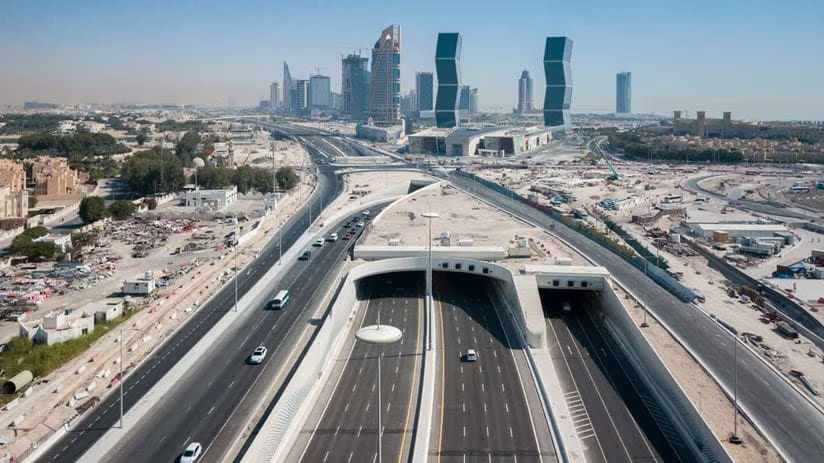
And for policymakers, the challenge isn’t finding louder warnings — it’s building roads, cars, and rules that don’t rely on fear to keep people alive.
Sometimes a wrecked car on the shoulder does make people slow down.
But lasting safety comes from designing roads that don’t need the reminder.
Recent Articles
Most Viewed
-thumb_webp.webp)
-thumb_webp.webp)
Advice


Related Articles
-thumb_webp.webp)

-thumb_webp.webp)
-thumb_webp.webp)
-thumb_webp.webp)