
 Login / Register


News & Reviews
-thumb_webp.webp)
Jetour G700 vs Toyota Land Cruiser in the Gulf
27 Oct 2025
When two large, body-on-frame SUVs go head-to-head, most people expect one to be the dominant benchmark while the other plays catch-up. But with the newcomer Jetour G700 stepping into the arena, things get interesting. Up against the venerable and highly respected Toyota Land Cruiser the comparison reveals far more than brand prestige—it touches on how modern hybrid power, desert-durability, heat-handling and everyday usability matter in a Gulf setting. For an audience in Qatar or the wider Gulf, where heat, sand, long throws between towns and highway bursts matter, this is a match worth reading.
Jetour G700
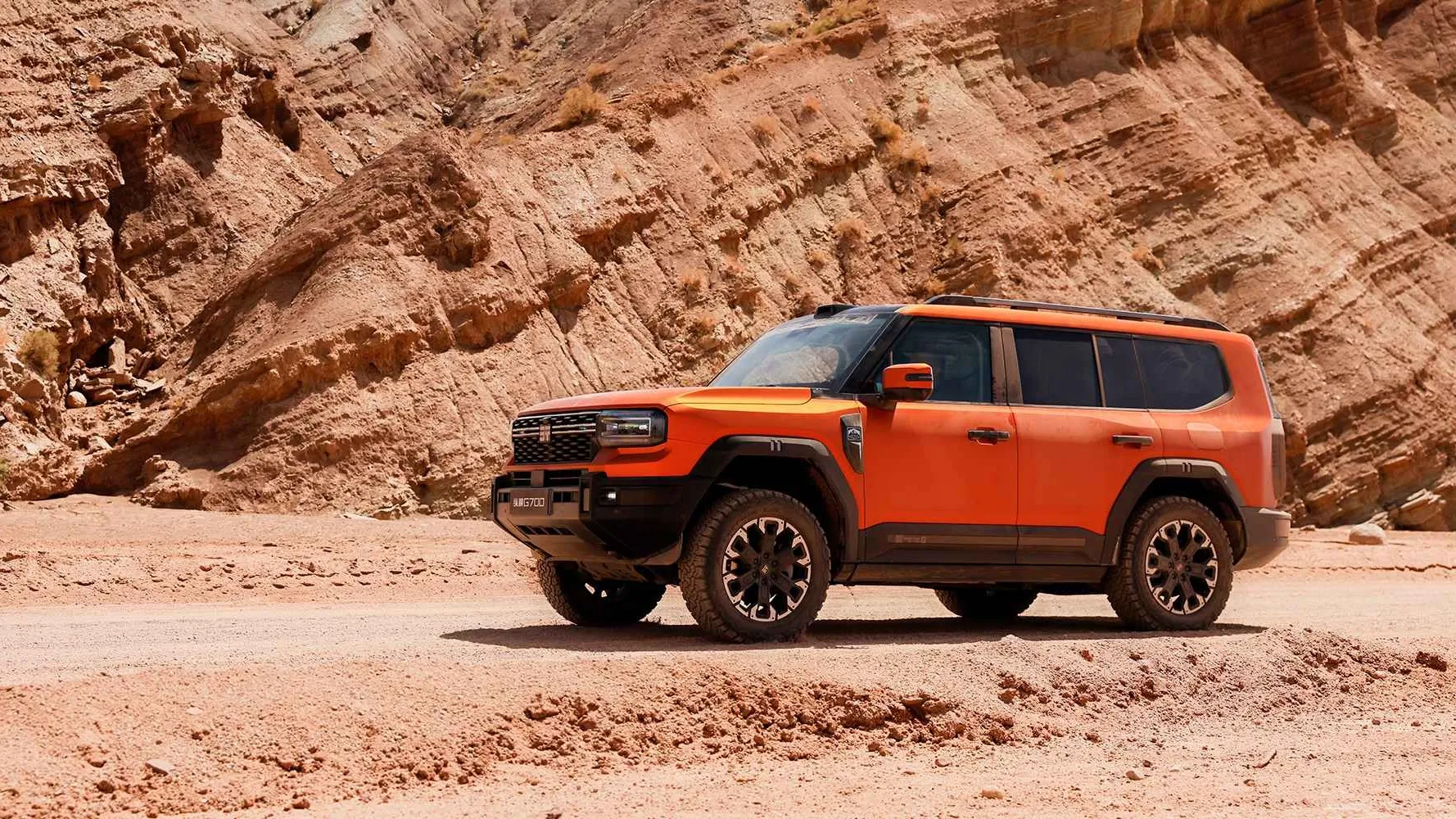
The Jetour G700 emerges as a bold statement in the full-size SUV segment.
Key figures and features:
- Powertrain & Performance: The G700 uses a 2.0-litre turbocharged petrol engine plus two electric motors in a plug-in hybrid layout with a dedicated hybrid transmission (2-speed DHT) according to its manufacturer. Published numbers claim a combined output around ~665 kW (~892 hp) and torque up to 1 135 Nm, with a 0-100 km/h time of 4.6 s.
- Chassis / Structure: A serious composition — body-on-frame strength, measurement 5 198 × 2 050 × 1 956 mm (L/W/H) with a wheelbase ~2 870 mm. (CarNewsChina.com) Ground clearance up to ~320 mm in some claims, wading depth ~970 mm.
- Drivetrain / Handling / Braking: The hybrid setup allows instant torque from the electric motors, and presumably full-time AWD/all-wheel-drive is part of the 4x4 logic (though specific gearbox ratios for desert use may vary). Cooling and thermal management will be critical in Gulf climates given high output and hybrid components.
- Interior & Tech: The brochure references a 35.4-inch ultra-wide digital instrument display + 15.6-inch central touchscreen. Additionally, off-road / tough-terrain credentials: 35° approach angle, 28° departure angle.
- Practicality: Although this is performance-oriented, the G700 claims serious off-road credentials and spacious dimensions. The plug-in hybrid nature suggests potential for lower running costs if charging infrastructure and local conditions permit. For Gulf use, the combination of high performance and strong terrain capability is notable.
- In the Gulf / Qatari context: The strong hybrid system may help mitigate heat and urban stop-go, though only if the local environment (charging, servicing) supports PHEV hardware. Desert sands and high ambient temperatures will challenge cooling systems, especially for such high-output hybrid units.
Toyota Land Cruiser
.avif)
The Toyota Land Cruiser remains the benchmark for rugged, large-SUV ownership in the Middle East.
Key specs and details:
- Powertrain & Performance: For the 2025/2026 model in the Gulf region, one of the highlighted variants is the 3.5-litre twin-turbo V6 hybrid version producing ~457 hp according to Qatar listings. Other variants include a 4.0 L naturally aspirated V6 producing ~271 hp in some markets. Real-world 0-100 km/h test results suggest about 7.4-7.8 s for the LC300 series V6 twin turbo.
- Chassis / Structure: The Land Cruiser is built on a very robust platform, designed for harsh terrains. The Gulf version emphasises long-distance capability, towing, 4WD.
- Drivetrain / Handling / Braking: A full-time 4WD with locking differentials, low-range gearing and high ground clearance combine to deliver proven desert and off-road performance. Though not as outright fast as performance-SUVs, the Land Cruiser’s strength is in durability and versatility.
- Interior & Tech: Well appointed for its class, strong build quality, and in Gulf spec typically offers seven-seat layouts, good cooling / climate control (critical in high heat) and strong after-sales network.
- Practicality: Since this model is well established in Qatar and the Gulf, resale value is high, servicing infrastructure strong, parts widely available and owner communities large. For desert duty, long highway trips, family use, the Land Cruiser is often the default choice. For pricing, local Gulf listing: starting around QAR 230,000 and up to ~QAR 400,000 for the top trims.
- In the Gulf context: The Land Cruiser is tried and trusted under very hot ambient temperatures, sand and long highway runs. Cooling systems, chassis robustness and availability of maintenance are all proven.
Why One Outsprints the Other
The Jetour G700’s electric motors deliver instantaneous torque off the line, enabling its ~4.6 s 0-100 km/h figure. The hybrid architecture (2.0 L turbo + dual-motors + 2-speed DHT) means the car can apply power very quickly without traditional turbo lag. This advantage gives it a clear edge in sprints.
The Land Cruiser, despite its history and engineering, is heavier, built more for durability and off-road bias than outright sprinting. With a real-world 0-100 of ~7 s for the twin-turbo V6. The naturally aspirated variant is even slower. The drivetrain is very dependable, but not optimised for sprint times.
In desert/high-temperature conditions (such as Qatar), the G700’s high output hybrid system must manage cooling loads, battery thermal stability, and sand/dust ingress risk. The Land Cruiser’s conventional drivetrain and extensive service network may be less spectacular in acceleration but more consistent in long-haul or off-road heat stress scenarios.
So: In a drag-style sprint the G700 clearly outsprints; but in the wider performance envelope (including reliability, heat management, terrain transitions) the Land Cruiser has the edge.
It’s Not Just About the Quarter-Mile
Whether for desert highways, urban running or off-road camps, other factors matter.
Comfort and refinement
G700: Modern interior, large digital displays, hybrid quietness under electric drive; however as a new model the real ride-feel in Gulf conditions is unproven.
Land Cruiser: Proven comfort for long distances, good climate control (vital in Qatari heat), refined for both highway and moderate terrain.
Braking and stopping power
G700: With high speed potential and heavy hybrid components the brakes must be robust; newer car means braking behaviour may not have decades of Middle East feedback yet.
Land Cruiser: Known stopping behaviour, parts and servicing well established.
Heat and desert road resistance
G700: Hybrid system adds complexity (battery, motors, cooling) — high ambient temps in Qatar/Arab Gulf may challenge that.
Land Cruiser: Robust cooling, track record in Gulf heat and desert use; easier servicing.
Road feel and handling
G700: Likely sharper on paved roads, better acceleration; but body-on-frame heavy mass may still mean typical SUV handling.
Land Cruiser: Balanced for off-road and highway, less sporty but very stable and predictable.
Value / resale / servicing
G700: New entrant in Gulf markets; may offer strong value for performance, but resale and service network may lag.
Land Cruiser: High resale value in Gulf; service network extensive; easier upkeep.
Environmental relevance
G700: Hybrid architecture offers better efficiency when used correctly; potentially lower emissions and fuel consumption in highway or urban use.
Land Cruiser: Conventional petrol or twin-turbo petrol; less efficient but reliability trade-off may matter more than pure fuel economy for many Gulf buyers.
Real-World Ownership
From a daily-use perspective in Qatar/Gulf:
Jetour G700: If you have shorter city/urban runs, occasional highway bursts and access to charging infrastructure (or at least hybrid charging in dealer network), the high performance and modern tech are exciting. But you’ll need to consider servicing maturity, parts availability, dealer network coverage, and how the hybrid system handles the Gulf’s harsh heat and sand.
Toyota Land Cruiser: If your usage includes desert runs, sand tracks, long highway hauls with family, and you value low-worry ownership, this is a strong contender. The service ecosystem is well established.
In both cases, cooling for HVAC and engine/drive components is essential in Gulf heat; conditioning for passengers and equipment must be robust. The G700 may offer advanced tech and higher performance, but the Land Cruiser offers established reliability.
Qatar Verdict
If you are based in Qatar, use your vehicle for a mix of highway commuting, maybe off-road weekend trips, and value strong after-sales, I’d lean you toward the Land Cruiser. It suits the region’s roads, climate, resale culture and service infrastructure.
If you are a performance-oriented user, want cutting-edge tech, hybrid performance and are comfortable being an early adopter with service trade-offs, the Jetour G700 is compelling—especially if the price is favourable relative to performance.
If your priority is straight-line performance and urban/sport-SUV feel, G700 wins; if priority is rugged reliability and usability over many years in harsh Gulf conditions, Land Cruiser wins.
Choose the Jetour G700 if you want maximum performance, embrace hybrid tech, plan for spirited driving (urban + highway) and are willing to accept the slight risk of newer brand/service infrastructure. It’s exciting and cutting-edge.
Choose the Toyota Land Cruiser if you prioritise long-term usability, desert/off-road capability, high resale value, established service networks and want a proven champion in the Gulf environment. You may sacrifice some outright sprint numbers, but you gain reliability and confidence.
Toyota Land Cruisers are already available on QMotor through local sellers here.
Recent Articles
Most Viewed
-thumb_webp.webp)
-thumb_webp.webp)
Advice


Related Articles
-thumb_webp.webp)

-thumb_webp.webp)
-thumb_webp.webp)